Smart Buildings and IoT Infrastructure
Buildings are where people spend most of their time and where much of the world's energy is consumed, which makes them a natural place to deploy sensing and computing at scale. For more than a decade, we have designed, built, and deployed the infrastructure for smart buildings. This includes BuildingDepot, an open-source building "operating system"; Brick, a metadata schema for portable building applications now supported by an industry consortium; and Mites, a general-purpose sensing infrastructure deployed across a campus building, whose paper received the Ubicomp/IMWUT Distinguished Paper Award. On top of this infrastructure, we explore how occupants and operators can interact with buildings. For example, BuildingChat enables natural-language interaction with building-scale sensing. Our open questions include how to make sensing substrates robust and easy to maintain, how to enable portable building apps, and how to balance utility with occupant privacy.
Projects
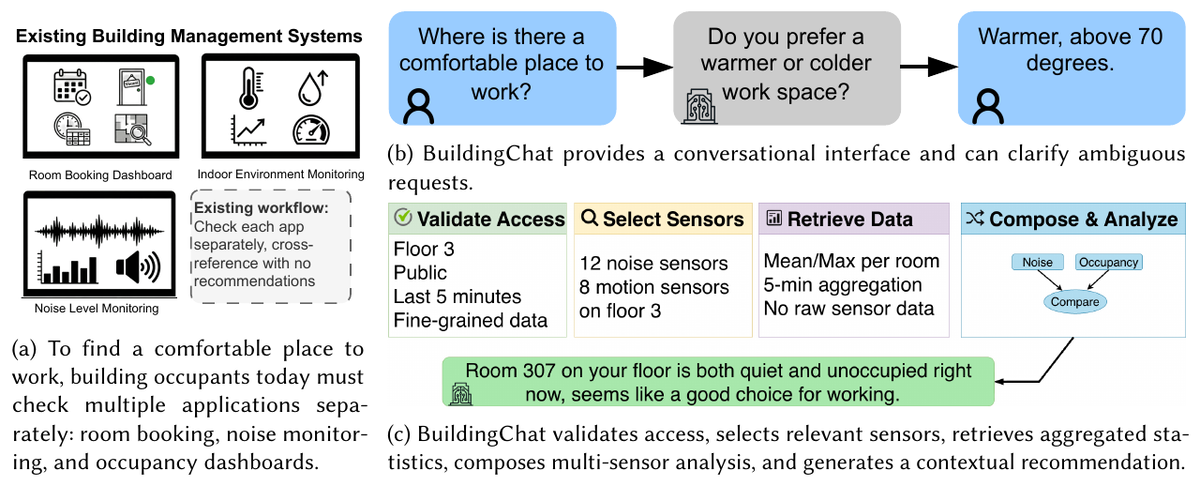
A conversational assistant that lets building occupants query 300+ sensors directly, with access control enforced by construction.
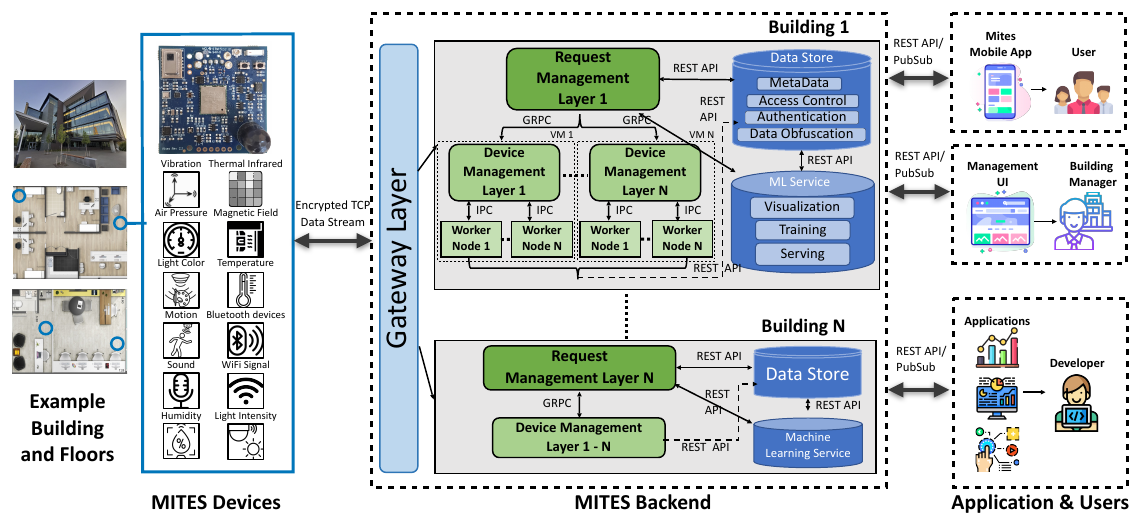
A building-scale sensing system of 314 multi-sensor devices deployed across a five-story university building, with built-in privacy, security, and ML support.
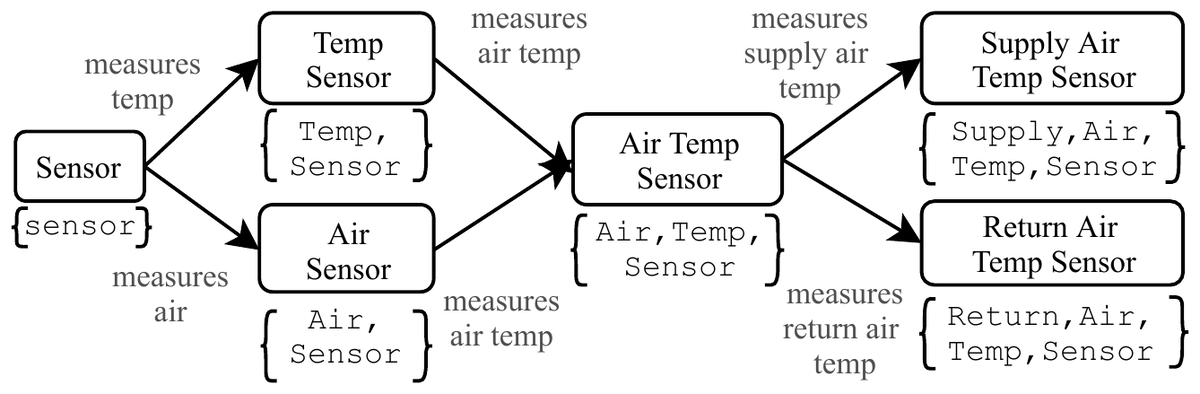
Brick+ gives Project Haystack's informal tags formal OWL semantics, so tag-based building metadata can be validated and translated into Brick.
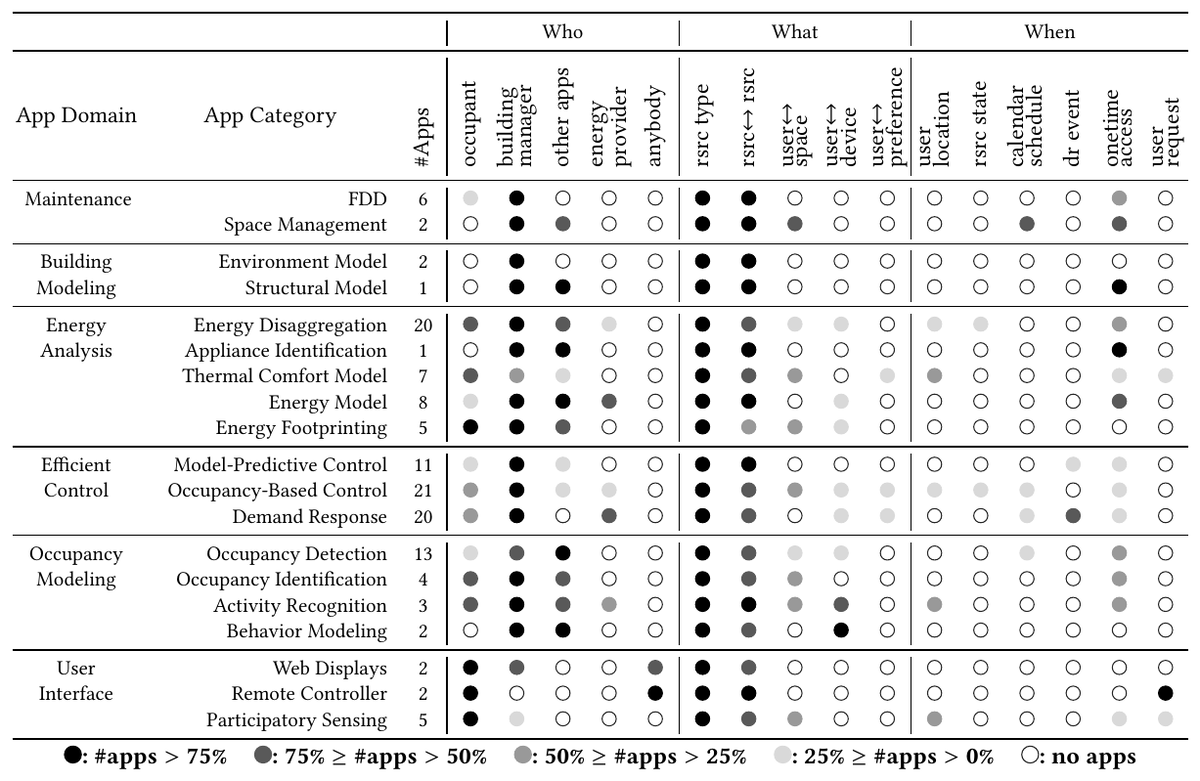
A review of 125 smart-building apps mapping who needs access to which building resources and when, to support least-privilege access control.
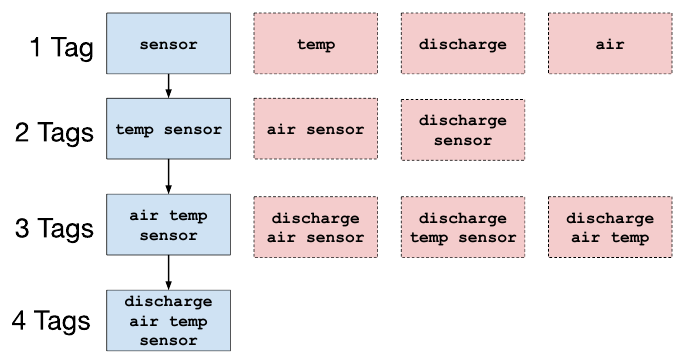
Brick+, an ontology that gives Project Haystack building tags formal meaning so valid Brick models can be inferred from informal Haystack ones.
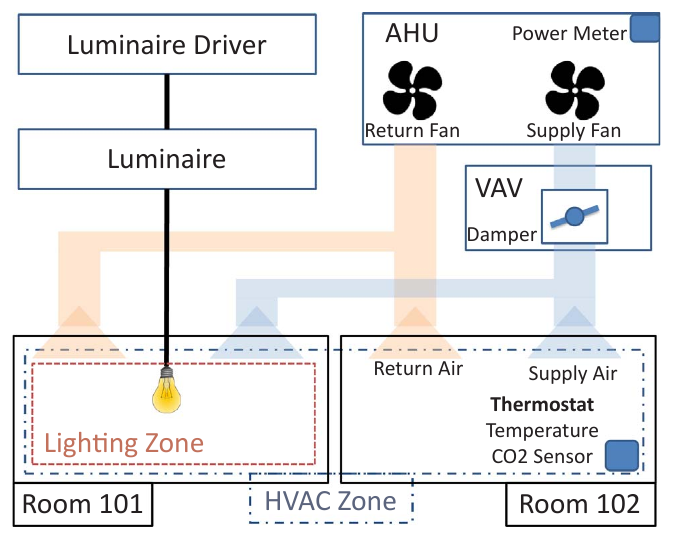
A metadata schema describing building sensors, equipment, and their relationships, tested on 17,700 data points from six buildings running eight unmodified applications.
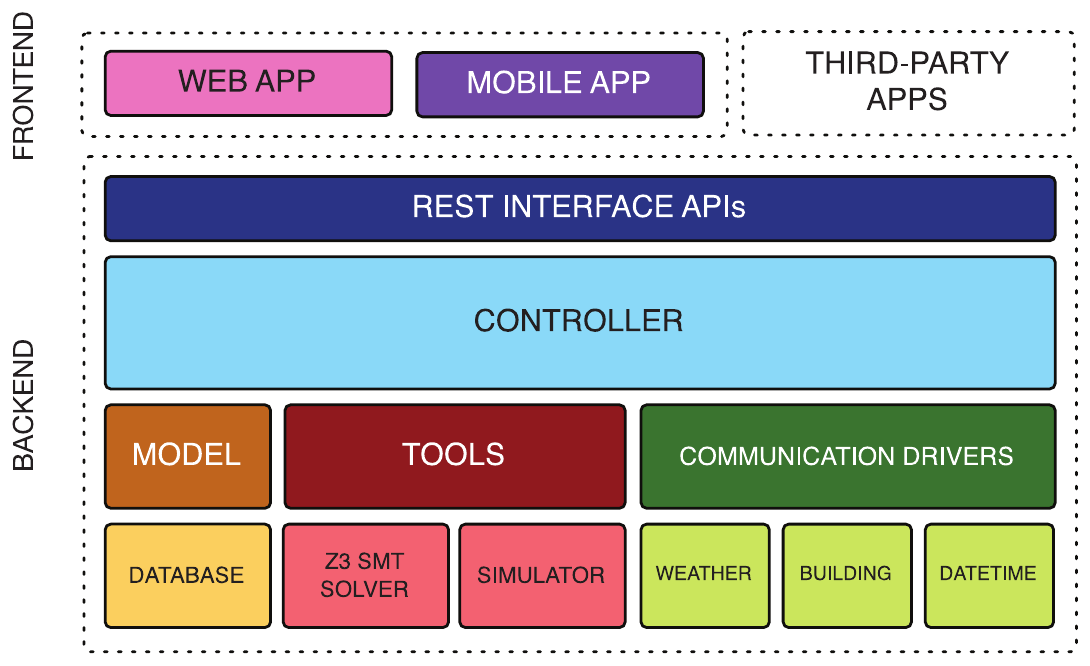
A system that lets office occupants write trigger-action rules for their rooms, with an SMT solver detecting conflicts between rules.
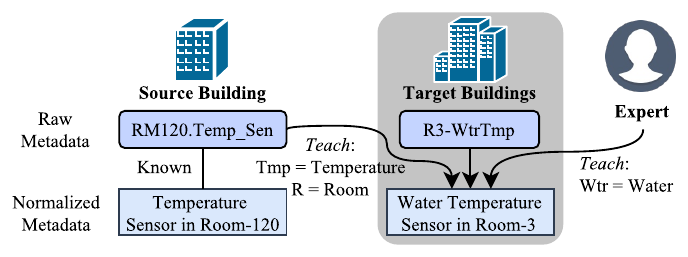
Active learning that transfers knowledge from already-mapped buildings to normalize new buildings' sensor metadata into Brick with only a few expert examples.
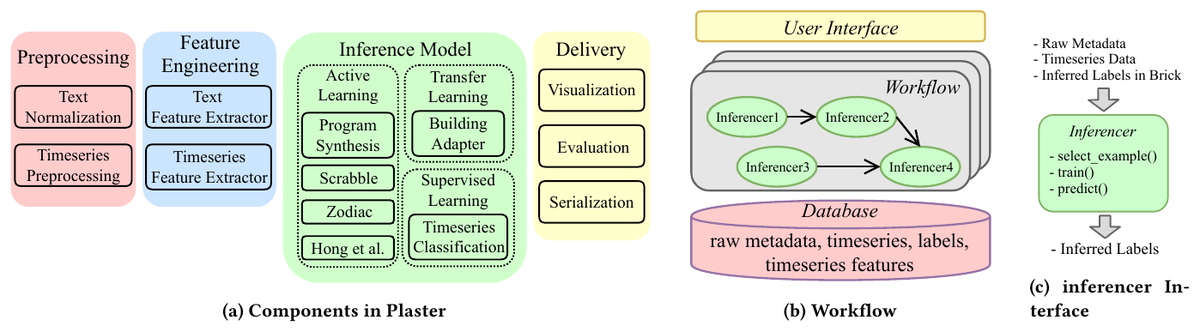
An open framework with shared interfaces and data models for combining, benchmarking, and prototyping building metadata normalization algorithms.
An end-user interface for IoT installations that combines virtual sensors, visual automation rules, and recommendations for sharing configurations.
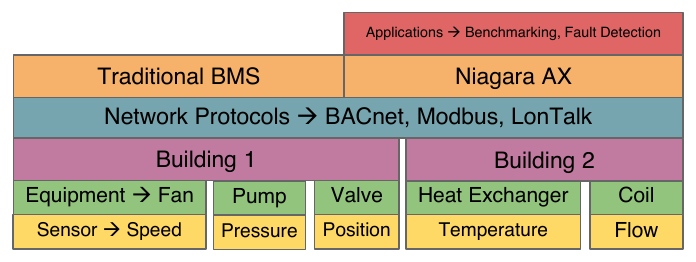
Interviews with ten building operators at five US institutions on where building management systems fall short, with design suggestions.
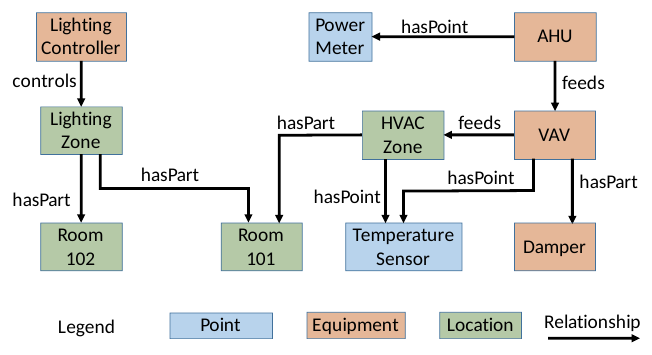
A uniform metadata schema for building sensors, equipment, and relationships, used to represent 17,700 data points across six buildings.
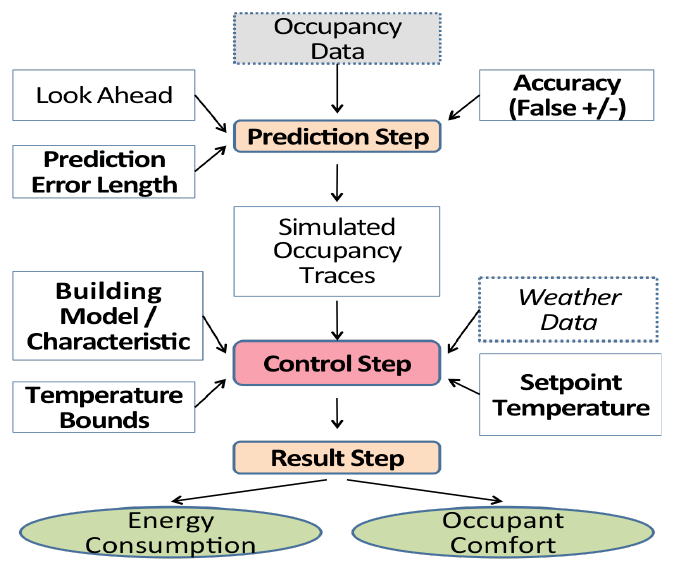
A simulation framework estimating energy savings and comfort tradeoffs of predictive HVAC control, using occupancy data from 235 office rooms.
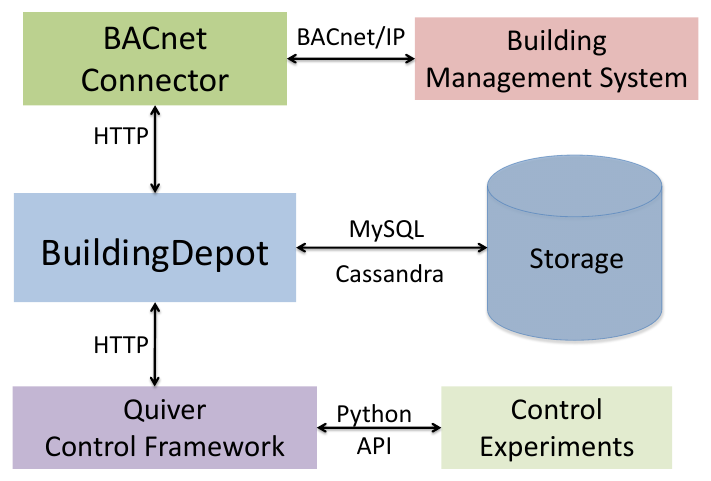
Safely perturbing a commercial building's HVAC controls to identify sensor types, colocate data points, and map actuator dependencies.
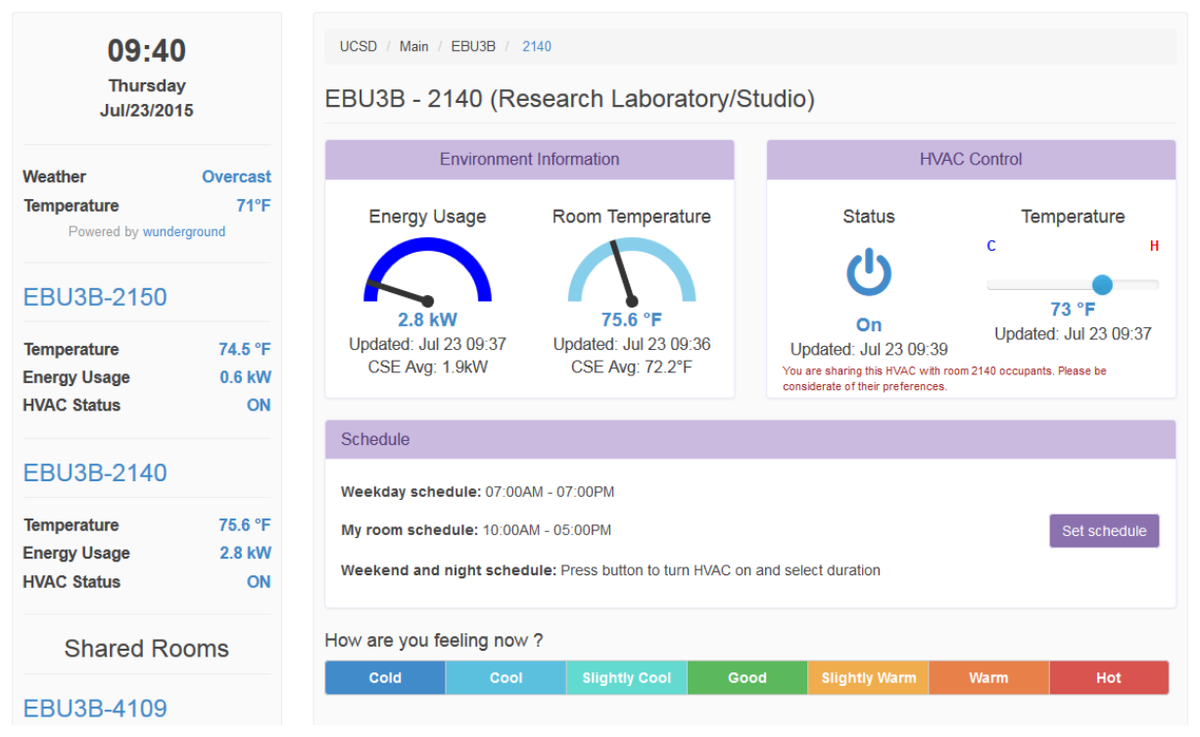
A 21-month deployment of a web-based software thermostat that left office occupants more comfortable than physical thermostats, without extra energy use.
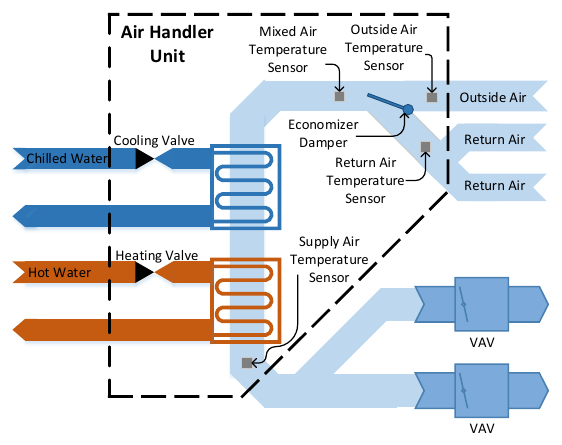
Estimates energy used by each air handler unit and thermal zone from existing HVAC sensors, with 44.5% lower error than mean-based estimates.
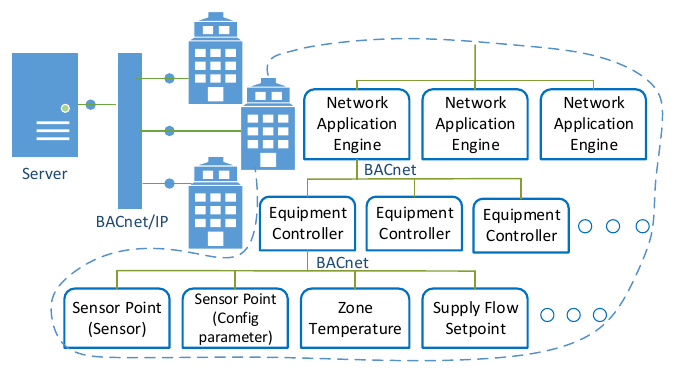
Active learning on sensor metadata to classify and name building HVAC points, reaching 98% accuracy with 28% fewer labeled examples than regex.
A position paper arguing that cyber-physical systems need shared models, abstractions, and architectures, using smart buildings and automobiles as case studies.
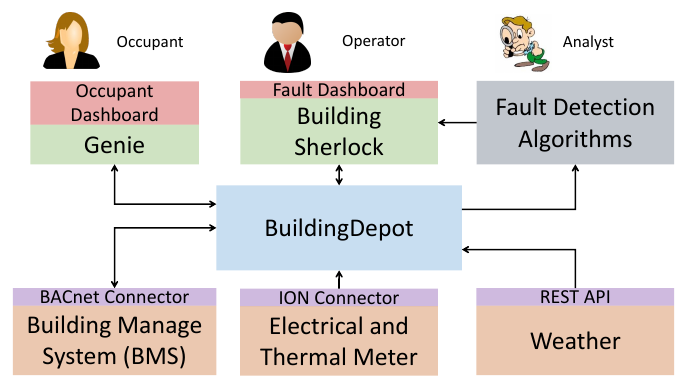
A web-service framework on BuildingDepot that runs fault detection algorithms over HVAC data, demonstrated in a 145,000-square-foot UC San Diego building.
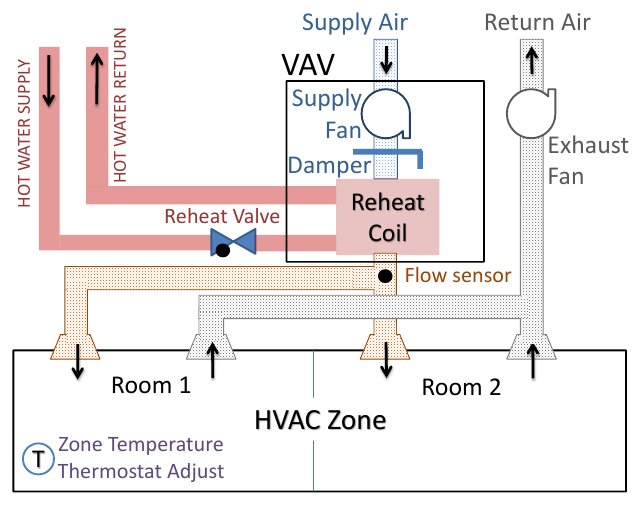
Unsupervised modeling and clustering of similar HVAC units to flag configuration faults, tested on 237 zones in a five-floor building.
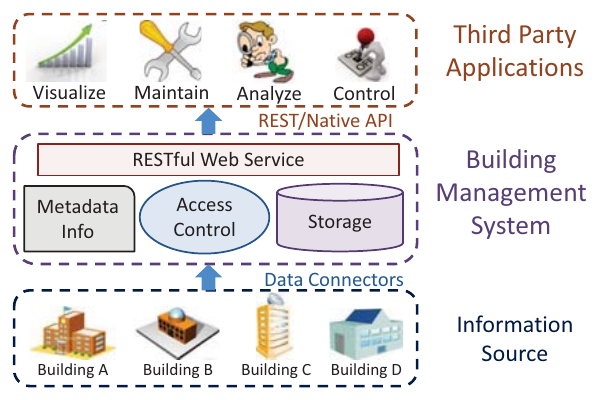
A building management platform that unifies sensor data storage, access control, and supervisory control so building applications can be reused across buildings.
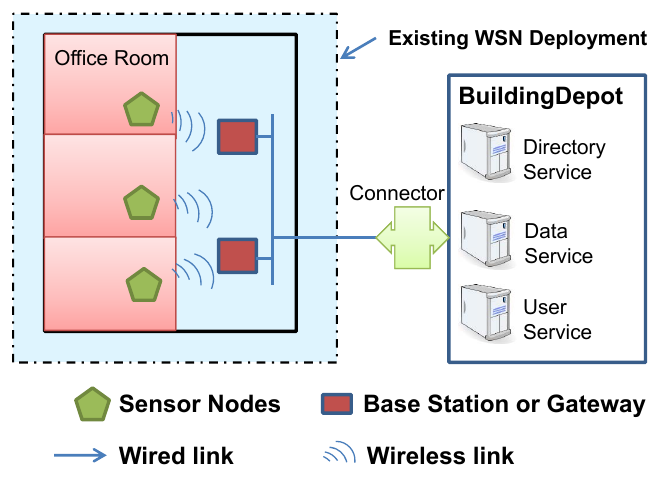
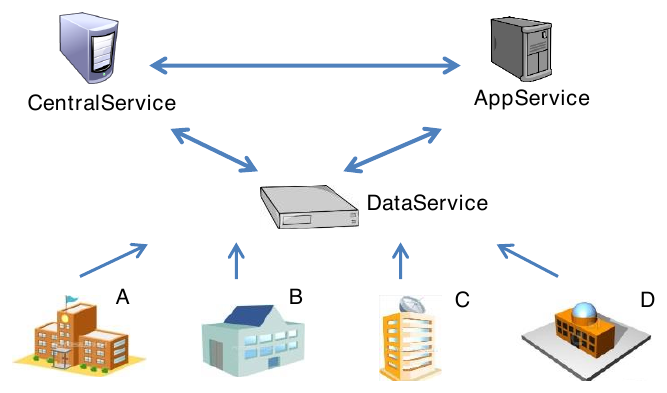
A distributed architecture for storing, accessing, and sharing building sensor data through a RESTful API with user and access management.